
Moving to Hampton Roads, VA: The Complete 2026 Relocation Guide |
Explore the cities, housing choices, commutes, and everyday life that shape a move to the 757 |
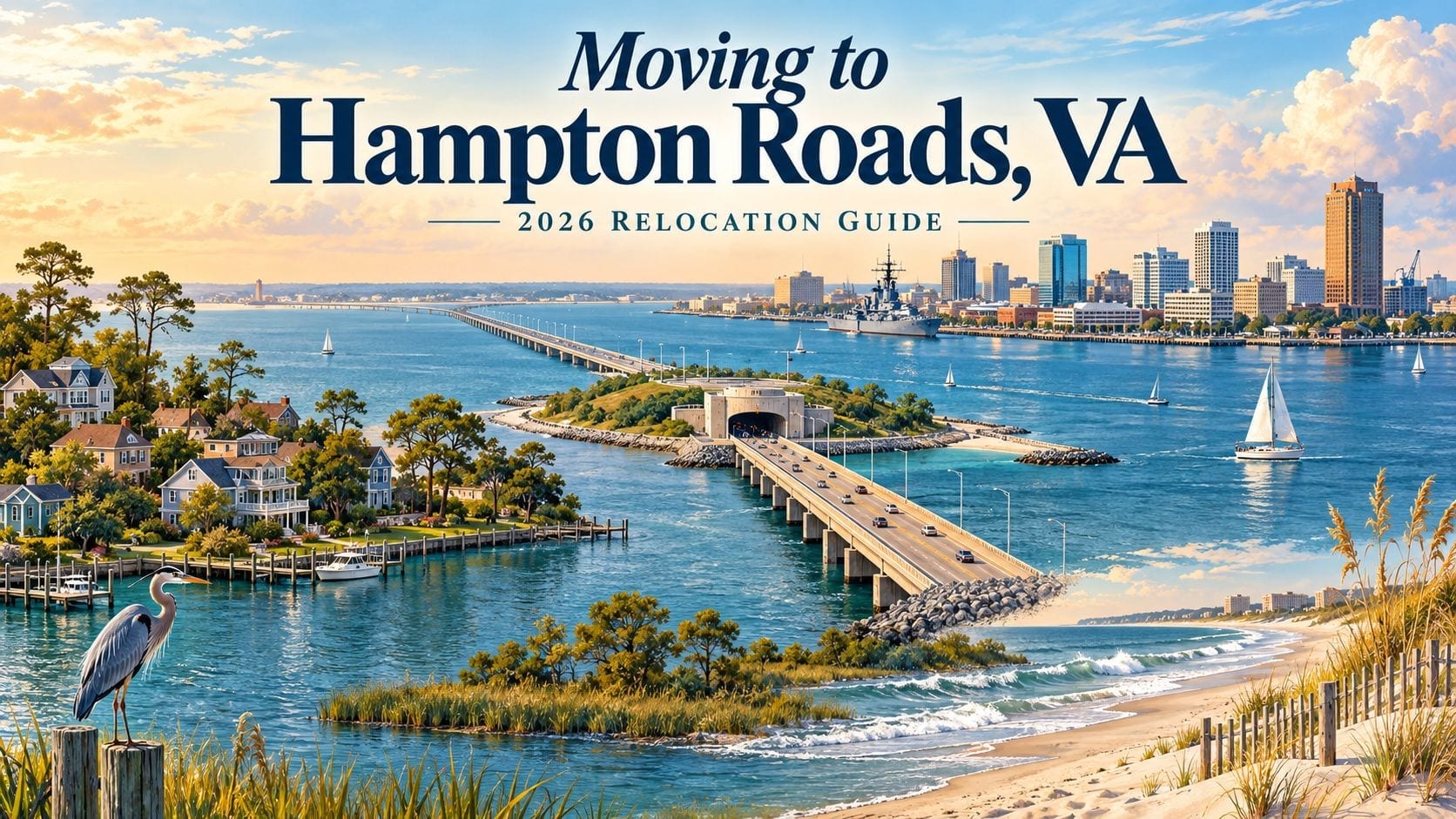
Moving to Hampton Roads, VA, can mean starting a military assignment, pursuing a new job, joining family, or finally living closer to the water.
But choosing a home here takes more than finding a city you like on a map.
Your daily routine will depend on which side of the harbor you live on, where you work, and which bridges or tunnels connect the two.
The region offers urban neighborhoods, established suburbs, historic communities, beaches, and areas with a quieter pace.
That variety gives newcomers options, but it also makes broad claims about affordability or the “best” place to live less useful than they first appear.
This guide introduces the cities, housing considerations, employment landscape, and everyday realities of living in Hampton Roads.
Whether you are relocating to the 757 next month or exploring a future move, start with the decisions that shape ordinary weekdays.
Weekend attractions matter, but a manageable commute and a comfortable housing budget matter every morning.
What Is Hampton Roads?
Hampton Roads is a region in southeastern Virginia, not a single city.
The name also refers to the harbor where major waterways meet, helping explain why shipping, naval operations, and waterfront living are central to its identity.
Hampton Roads also serves as a major hub for the military as almost all the armed services are located here.
You will hear residents refer to the Peninsula, the Southside, and the 757.
These terms describe different aspects of the same regional conversation.
The Peninsula includes Hampton and Newport News, with the Williamsburg area farther northwest.
The Southside includes Norfolk, Virginia Beach, Chesapeake, Portsmouth, and Suffolk.
Those familiar cities are not the whole region. You would be amazed on how many people get this confused.
Poquoson and surrounding counties, including York, James City, and Isle of Wight, also belong in the broader Hampton Roads picture.
Regional boundaries can vary by the agency or statistical definition being used.
|
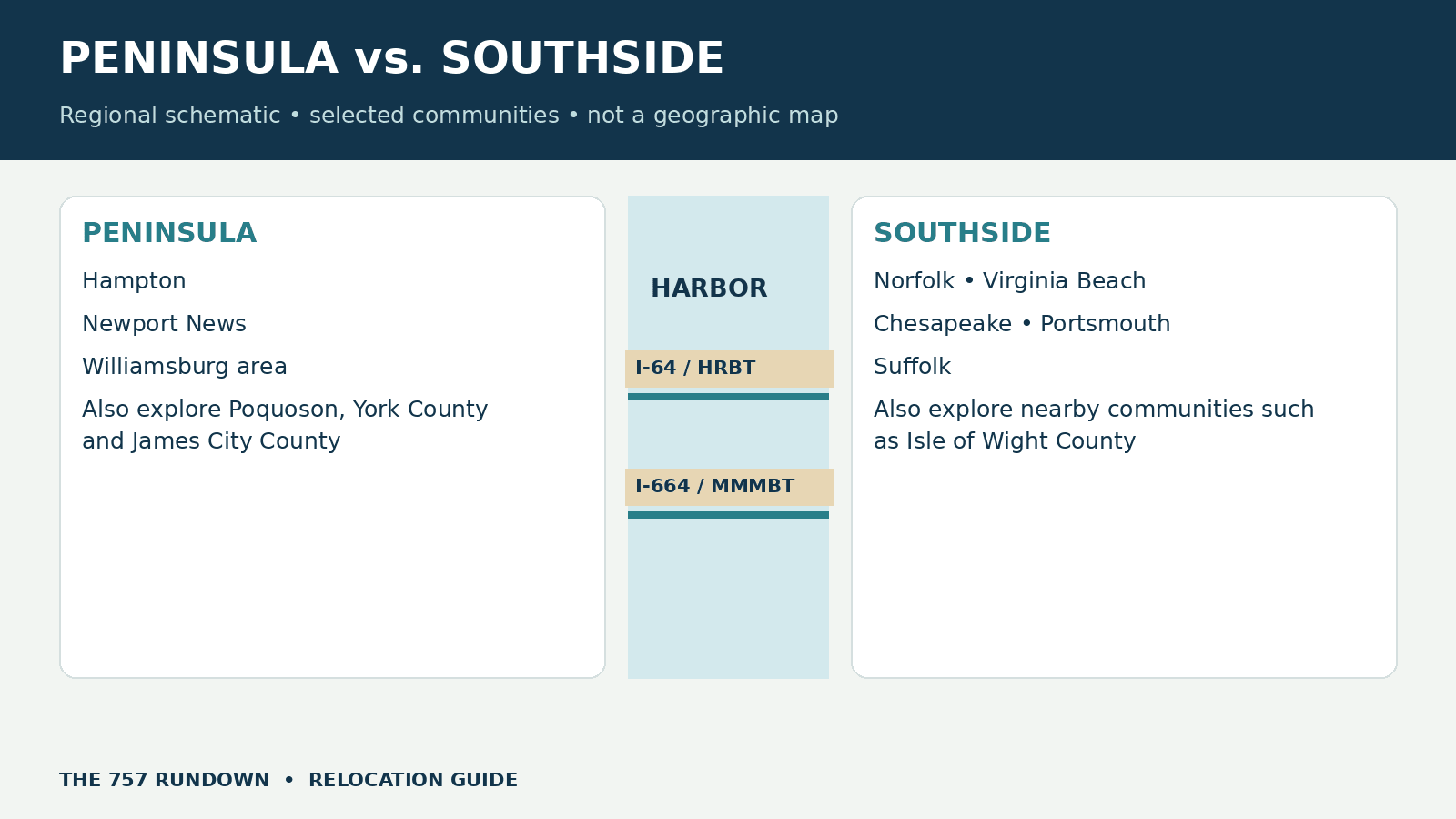 Selected Peninsula and Southside communities; schematic, not a geographic map. |
What Cities Are in Hampton Roads?
For a clear breakdown of the Seven Cities, surrounding localities, and how locals divide the region, read our What Cities Are in Hampton Roads, VA? A Local Guide.
Hampton
Hampton combines established neighborhoods, waterfront areas, and access to Langley.
Home to Langley Air Force base, Peninsula Town Centre and the Virginia Air & Space Museum are just some of the amazing attractions you will find in Hampton.
Downtown, Phoebus, Fort Monroe, and Buckroe offer different settings within the same city.
Consider Hampton when your work or family life centers on the Peninsula, then compare individual neighborhoods rather than treating the city as one housing market.
Newport News
Newport News stretches along the Peninsula, with shipbuilding, military employment, shopping areas, parks, and residential neighborhoods.
Much like Hampton, Newport News is home to the Army at Fort Eustis located in the uptown area of Newport News.
A home near the southern end of the city can produce a different commute from one near its northern end.
Check the exact worksite before narrowing your housing search.
Norfolk
Norfolk offers downtown living, waterfront neighborhoods, universities, cultural attractions, and a major naval presence.
It may appeal to newcomers seeking an urban setting, but walkability varies by neighborhood.
Here you will find the Navy at one of the largest naval bases, Norfolk Naval base nestled on the coastal edge of Norfolk.
Parking, flood exposure, and the route to your workplace deserve attention alongside restaurants and entertainment.
Virginia Beach
Virginia Beach includes much more than its resort strip.
Its neighborhoods range from coastal communities to suburban developments and more rural areas in the south.
Decide whether you want beach access, proximity to Oceana, or convenient shopping and commuting before choosing where within the city to live.
Chesapeake
Chesapeake offers suburban neighborhoods and areas with more open space, alongside major roads and commercial centers.
Its large footprint makes location especially important.
Two homes with Chesapeake addresses may have quite different access to Norfolk, Virginia Beach, or other employment centers.
Portsmouth
Portsmouth has historic character, waterfront areas, and connections to naval and maritime employment.
Olde Towne provides a distinct setting, while other neighborhoods offer different housing choices.
If you will cross to Norfolk regularly, include tunnel tolls and travel time in your comparison.
Suffolk
Suffolk combines a historic downtown, suburban growth, and rural landscapes.
Northern Suffolk and more distant parts of the city can feel quite different.
Buyers seeking space should weigh the distance to their workplace, healthcare, shopping, and activities before assuming a larger property is the better value.
Williamsburg
Williamsburg and nearby James City and York counties offer historic attractions, the William & Mary community, and varied residential settings.
Distinguish the city from the surrounding counties when comparing schools, taxes, and services.
A Williamsburg-area home also requires careful commute planning if you work farther down the Peninsula.
Peninsula vs. Southside: What's the Difference?
Choosing a side of the water is often the first useful relocation decision.
Peninsula communities may fit people working in Hampton, Newport News, or the Williamsburg area.
Southside communities may fit people whose daily destinations are in Norfolk, Virginia Beach, Chesapeake, Portsmouth, or Suffolk.
The Hampton Roads Bridge-Tunnel carries Interstate 64 between Hampton and Norfolk.
The Monitor-Merrimac Memorial Bridge-Tunnel carries Interstate 664 between the Peninsula and the Southside.
Other crossings serve different routes across the region.
The two sides are connected, but crossing the harbor adds a potential bottleneck to your schedule.
A short-looking distance can involve a much longer drive during congestion or an incident.
If your household has two workplaces on opposite sides, compare several realistic routes and schedules.
There may be no perfect midpoint.
Prioritize the trips you make most frequently, and evaluate the actual neighborhood-to-workplace journey.
How Much Does It Cost to Live in Hampton Roads?
There is no single monthly budget that represents the whole region.
Housing costs depend on the neighborhood, property size, condition, amenities, and proximity to water or employment.
Rental availability and purchase prices also change over time.
Build your comparison around total monthly spending.
Include rent or mortgage payments, utilities, groceries, insurance, transportation, parking, and any recurring tolls.
For a purchase, add property taxes, association dues where applicable, and a realistic maintenance allowance.
A less expensive home can lose some of its advantage if it requires substantially more driving.
Similarly, a rental with a higher advertised price may compare differently if certain utilities are included.
Request current quotes and review comparable properties with similar features.
Regional averages provide background, but they cannot tell you what a particular household will spend.
Keep moving expenses, deposits, and an emergency cushion separate from your ordinary monthly budget.
For a closer look at the monthly expenses to compare, read our cost of living in Hampton Roads guide. |
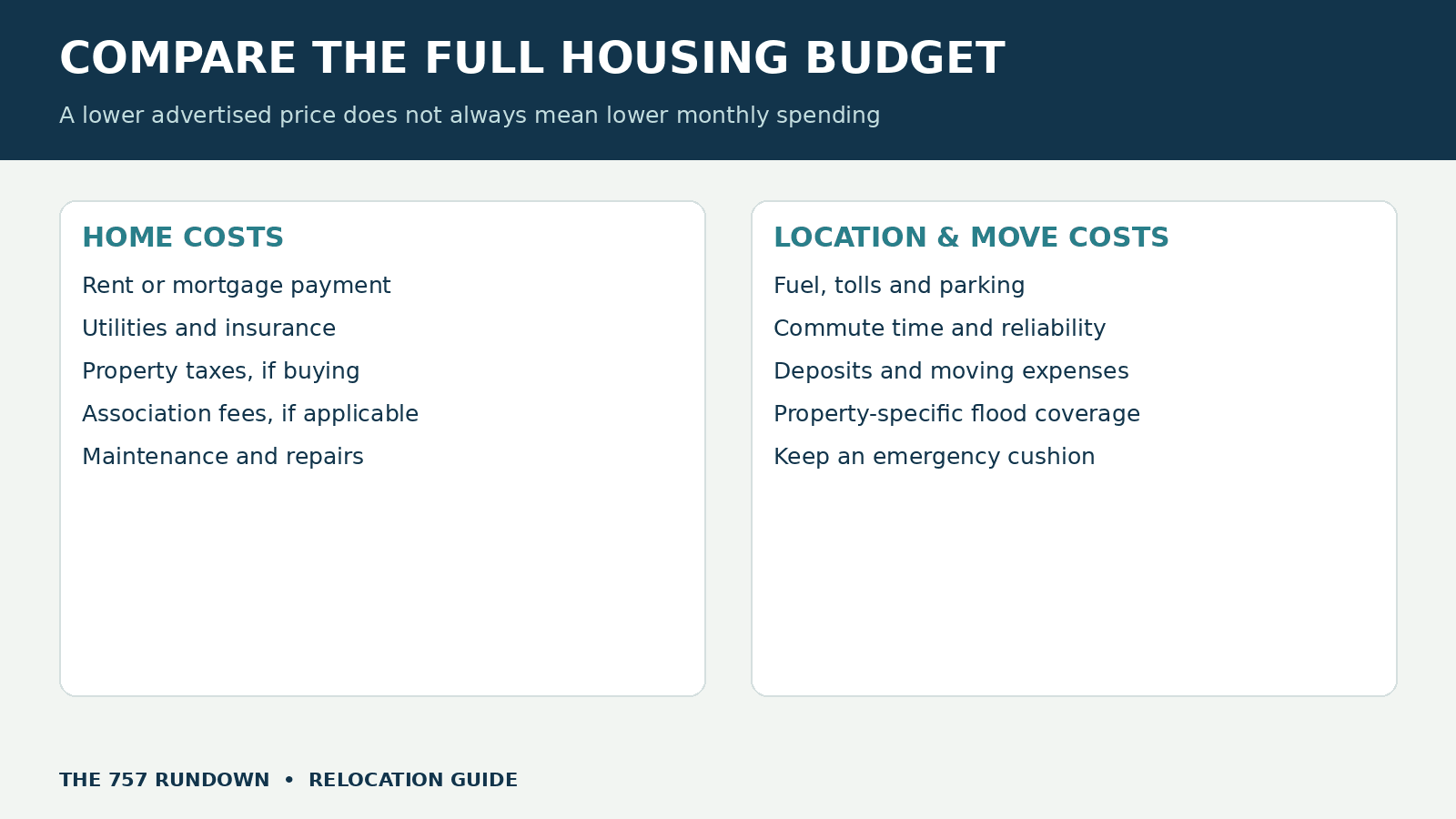 Compare total housing and transportation costs. |
Housing in Hampton Roads
The housing landscape includes apartments, townhomes, older detached houses, newer subdivisions, and waterfront properties.
Older neighborhoods may offer mature trees and established streets, while newer developments may appeal to people seeking different layouts or community amenities.
Neither age nor appearance settles whether a property is right for you.
Review maintenance, drainage, parking, heating and cooling, and the condition of major systems.
For rentals, ask about lease terms, renewal policies, pet rules, and responsibility for utilities.
Renting first can give newcomers time to learn the region before purchasing.
Buying may suit someone with a clear long-term plan and a well-researched location.
In either case, visit at different times and understand the property's specific flood considerations before committing.
|
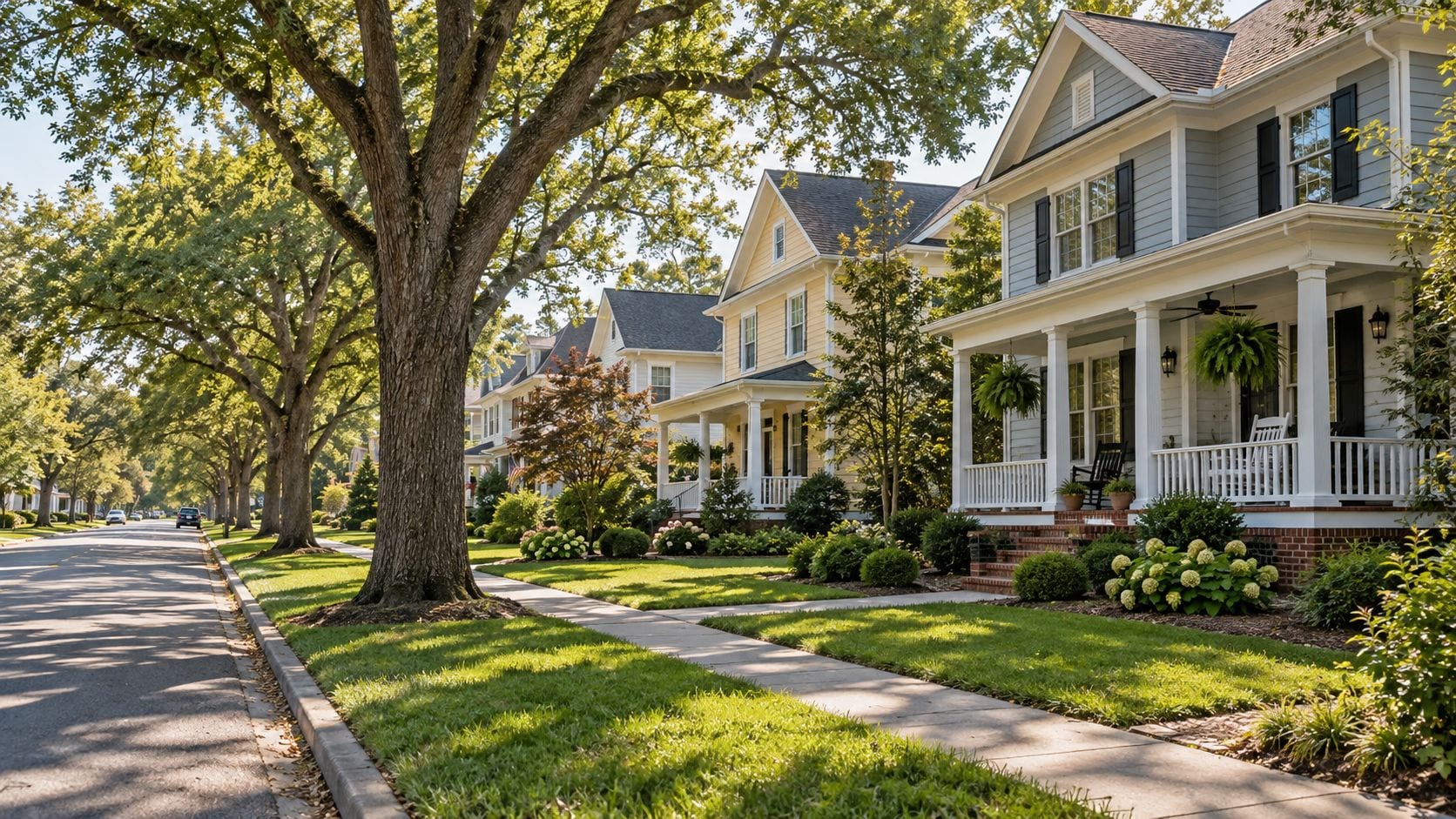 Generated photorealistic illustration of a regional-style neighborhood. |
Most Affordable Places to Live in Hampton Roads
If affordability leads your search, include Hampton, Newport News, Portsmouth, and Suffolk among the places you compare.
This is a starting shortlist, not a ranking of the cheapest cities.
Each contains neighborhoods and property types with different price levels.
Compare similar homes rather than contrasting a small older house in one city with a new waterfront property in another.
Look at condition, insurance, taxes, association fees, and commuting expenses together.
For example, a Portsmouth home may suit someone working nearby but create additional tunnel costs for a different commute.
A Suffolk property may offer desired space while placing everyday destinations farther away.
The useful question is which location gives your household the best overall fit within its budget.
What Is the Job Market Like in Hampton Roads?
Military and defense activity, shipbuilding, maritime logistics, healthcare, tourism, education, and government-related work all contribute to the regional employment landscape.
Technical careers can intersect with several of these sectors, including cybersecurity, engineering, and information technology.
Research employers directly and distinguish a broad industry presence from currently available positions.
Some roles require specific credentials, experience, or security eligibility.
Others involve shifts that change the practical commute.
Before choosing housing, confirm whether a job is fully on site, hybrid, or remote.
Ask about the actual reporting location, parking, and work hours.
An employer's mailing address may not be the place you travel to each day.
Military Life in Hampton Roads
Military-connected households are an important part of local life.
Installations include Naval Station Norfolk, Naval Air Station Oceana, and the Langley and Fort Eustis locations of Joint Base Langley-Eustis.
Coast Guard activity and military-support businesses add to that presence.
For a move on military orders, start with the installation and the gate you expect to use.
Langley and Fort Eustis are separate locations, so a reference to the joint base alone does not resolve where you should live.
Ask the appropriate housing or relocation office about current resources and requirements.
Compare on-base and off-base options using your household's needs and assignment details.
Include school logistics, childcare, spouse employment, and gate traffic in the decision.
Hampton Roads Traffic and Commutes
Traffic deserves serious attention before you sign a lease.
Interstate 64, Interstate 664, Interstate 264, and connecting roads serve different parts of the region.
Harbor crossings and other bottlenecks can make commute reliability as important as the average drive time.
The Downtown and Midtown tunnels connect Norfolk and Portsmouth and have tolls that vary by travel time and payment method.
Those are different crossings from the Hampton Roads Bridge-Tunnel and Monitor-Merrimac.
Test your likely route during the hours you would actually travel.
Check both directions, and identify a realistic alternative when an incident affects the usual crossing.
Use current traffic information rather than relying on an uncongested weekend drive.
For crossing options, toll budgeting, E-ZPass Flex, and commute-testing tips, read our Commuting in Hampton Roads: Bridges, Tunnels, and Tolls guide. |
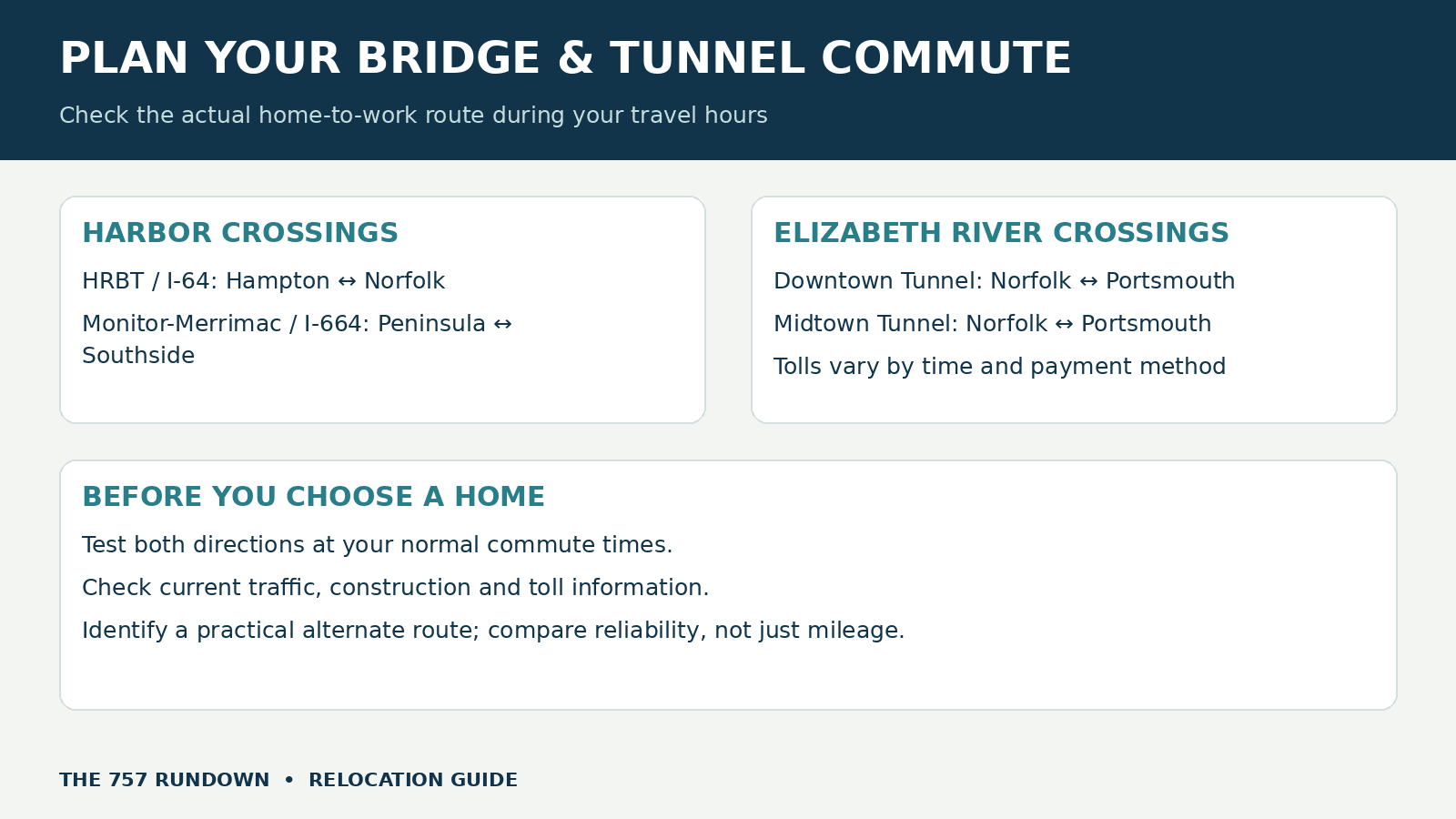 Plan the actual route you will travel most often. |
What's the Weather Like in Hampton Roads?
Expect hot, humid summers and generally milder winters than many inland or northern destinations.
Spring and fall offer opportunities to enjoy the waterfront and parks, but conditions can change quickly.
Winter weather still occasionally disrupts travel.
Coastal storms, tropical systems, heavy rain, and tidal flooding deserve practical preparation.
Flood exposure varies by property and street, and a home does not need an ocean view to require careful research.
Check the property's flood information, ask about previous drainage problems, and understand how surrounding roads respond during storms.
Discuss coverage with an insurance professional rather than assuming every type of water damage is included in a standard policy.
Learn local evacuation guidance and keep a household storm plan.
|
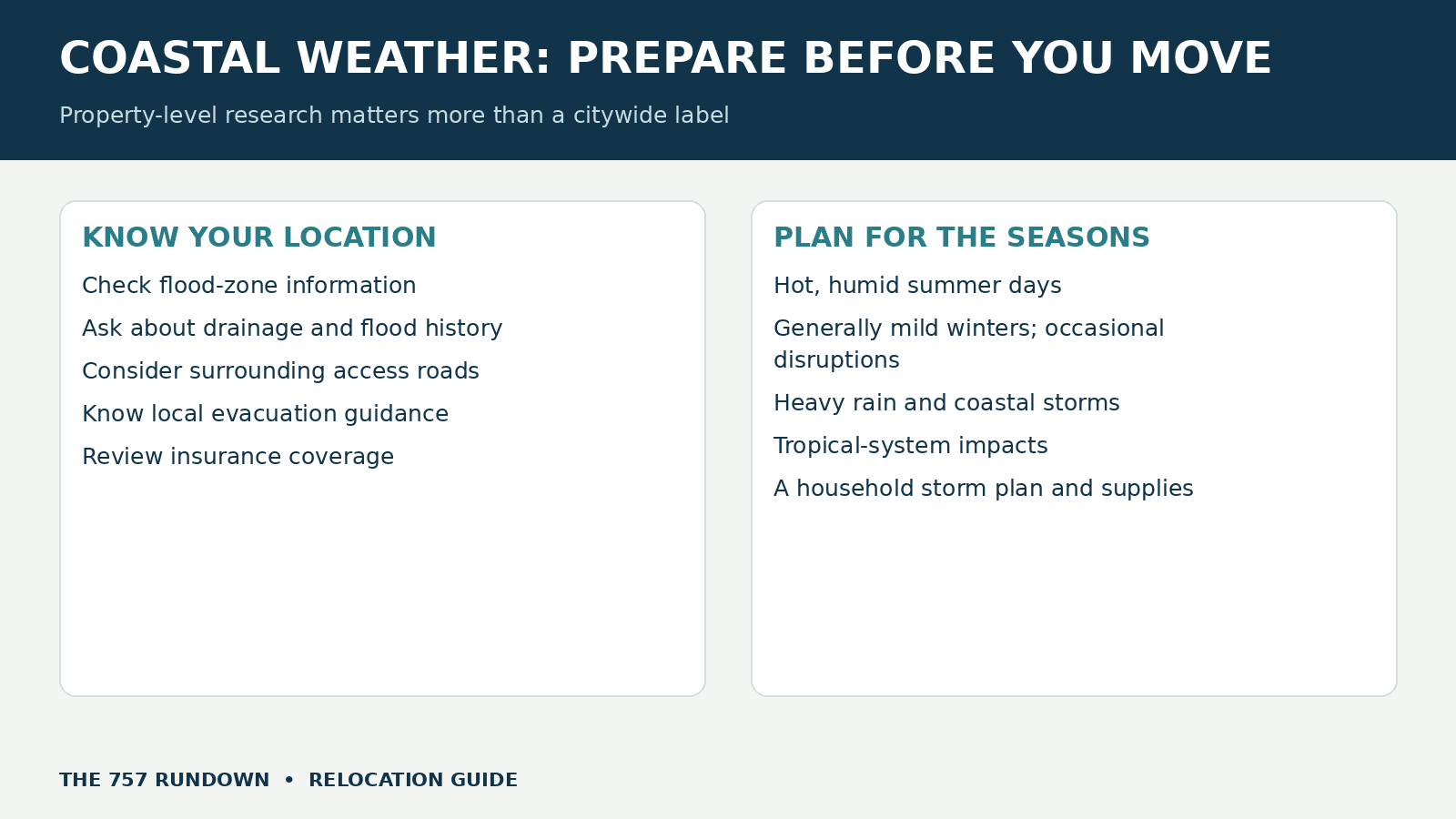 Prepare for coastal weather at the property level. |
Beaches and Outdoor Recreation
The Virginia Beach Oceanfront is the region's best-known beach destination, but it is only one option.
Chesapeake Bay beaches provide another coastal setting, and Buckroe Beach gives Hampton residents a waterfront destination on the Peninsula.
First Landing State Park offers trails and access to natural coastal landscapes in Virginia Beach.
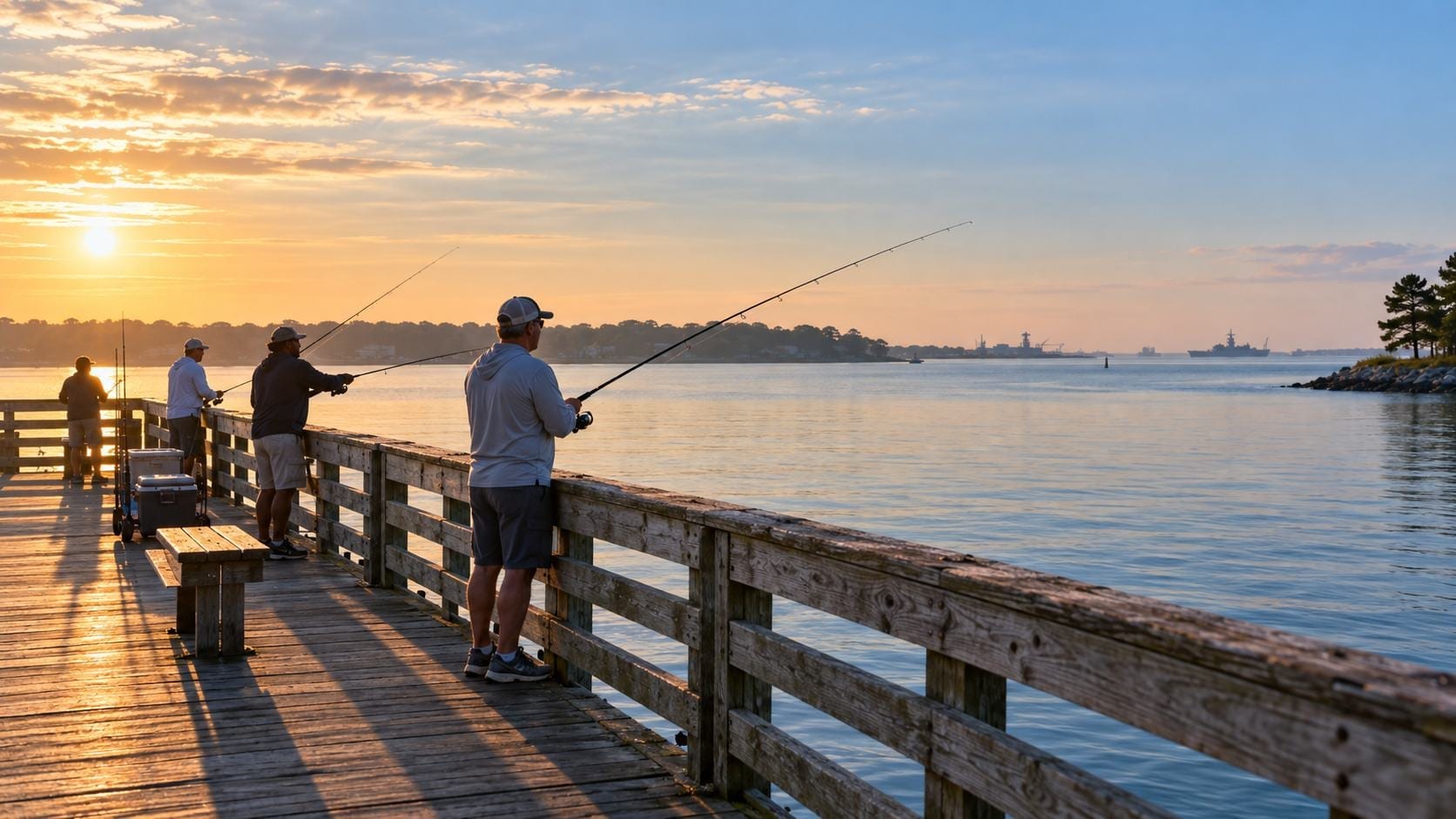
Across the region, parks, waterways, and trails create opportunities for walking, cycling, kayaking, boating, and fishing.
Choose outdoor amenities you can realistically use during an ordinary week.
A nearby park may contribute more to daily life than a famous attraction across the harbor.
Check current access rules, parking arrangements, seasonal services, and activity requirements before heading out.
|
 Generated photorealistic illustration of coastal family life. |
Things to Do in Hampton Roads
Living here brings access to history, museums, performances, sporting events, and waterfront activities.
The Williamsburg area adds historic experiences, while Norfolk, Virginia Beach, Hampton, and Newport News offer their own cultural destinations.
When exploring a possible neighborhood, spend part of the visit doing normal errands.
Notice where you would shop, exercise, meet friends, and spend a quiet evening.
That gives a clearer picture of local life than an attraction-only itinerary.
Restaurants and Food
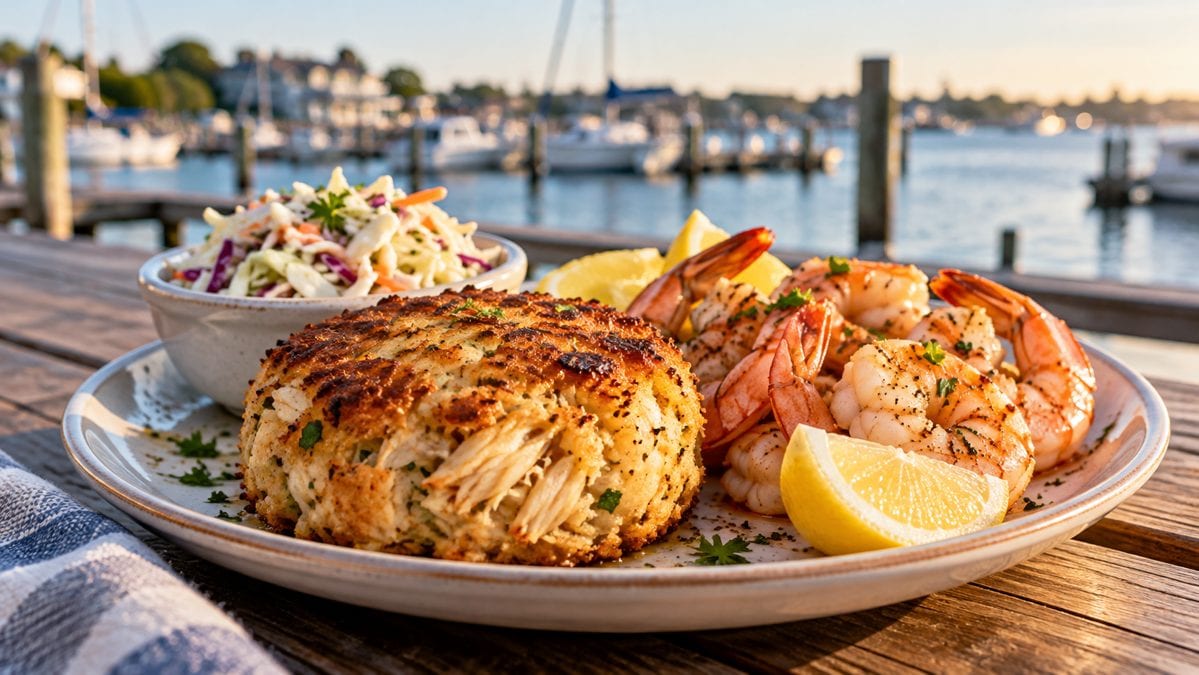
Seafood is a natural part of the regional food conversation, with Chesapeake Bay and coastal influences shaping local menus.
The broader dining scene also includes international cuisines, casual neighborhood favorites, breweries, and independently owned restaurants.
Norfolk and Virginia Beach offer many dining districts, but the Peninsula has its own restaurant communities.
Downtown Hampton, Phoebus, and different parts of Newport News are worth exploring when evaluating everyday options.
Is Hampton Roads a Good Place to Live?
Hampton Roads may suit people who value waterfront access, varied communities, and careers connected to its established industries.
You can choose among urban surroundings, suburban neighborhoods, historic settings, and more spacious areas without leaving the broader region.
The trade-offs include congestion, certain toll routes, coastal weather exposure, and substantial differences between neighborhoods.
These factors deserve the same attention as beaches and cultural attractions.
For households with children, verify school assignments for the exact address and review current programs and transportation.
Do not assume that a citywide reputation tells you everything about a particular school.
There is no universal answer.
A location that works beautifully for a remote worker may frustrate someone crossing the harbor every weekday.
Match the region's opportunities to your actual routine, budget, and priorities.
Which Hampton Roads City Is Right for You?
For a detailed city comparison, read our Best Places to Live in Hampton Roads, VA: Choosing the Right City guide.
Consider Hampton or Newport News when Peninsula employment and amenities anchor your week.
Explore Norfolk if an urban setting and access to naval or downtown employment appeal to you.
Look across Virginia Beach for coastal and suburban options that fit your commute.
Consider Chesapeake when suburban surroundings or additional space are priorities, and compare Portsmouth when its location and neighborhoods align with your needs.
Explore Suffolk with careful attention to distance, and the Williamsburg area when its setting fits both your lifestyle and daily destinations.
What Should You Know Before Moving?
First, confirm your workplace and test the commute.
Second, compare complete housing costs rather than advertised prices alone.
Third, check property-level flood information and insurance options.
Visit both sides of the harbor if you are unfamiliar with the region.
Verify school assignments, childcare availability, and access to healthcare where relevant.
Ask about parking, utilities, pet restrictions, and association rules before committing to a property.
Frequently Asked Questions
Is Hampton Roads expensive?
Costs vary by neighborhood, housing type, and household needs.
Compare current properties and total expenses rather than relying on one regional affordability label.
What is Hampton Roads known for?
The region is associated with naval activity, shipbuilding, ports, beaches, waterways, and American history.
Different cities emphasize different parts of that identity.
Which airport serves Hampton Roads?
Norfolk International Airport serves the region, and Newport News/Williamsburg International Airport provides another Peninsula option.
Compare current routes and the drive from your intended home.
How far is Hampton Roads from Richmond or Washington, D.C.?
There is no single regional distance because your starting city matters.
Check an address-to-address route and allow for traffic rather than assuming a fixed travel time.
Does Hampton Roads get hurricanes?
Tropical systems can affect the region, alongside other coastal storms.
Know your property's exposure and the local guidance that applies to your household.
Which side should I live on?
Start with the side containing your most frequent destinations.
If you must cross regularly, test that route before choosing housing.
Get to Know the 757 Before You Arrive
Moving to Hampton Roads works best when you choose for daily life: your commute, housing budget, neighborhood needs, and the activities you will actually enjoy.
Explore the region with those priorities in mind, and its variety becomes easier to navigate.
Moving to or visiting Hampton Roads?
Subscribe to The 757 Rundown for local news, restaurants, events, things to do, real estate, jobs, and the stories shaping the region.
Get to know the 757 before you arrive, and stay connected as you make it home. |

0 Comments
Join the conversation
Be the first to comment
Share your thoughts above.