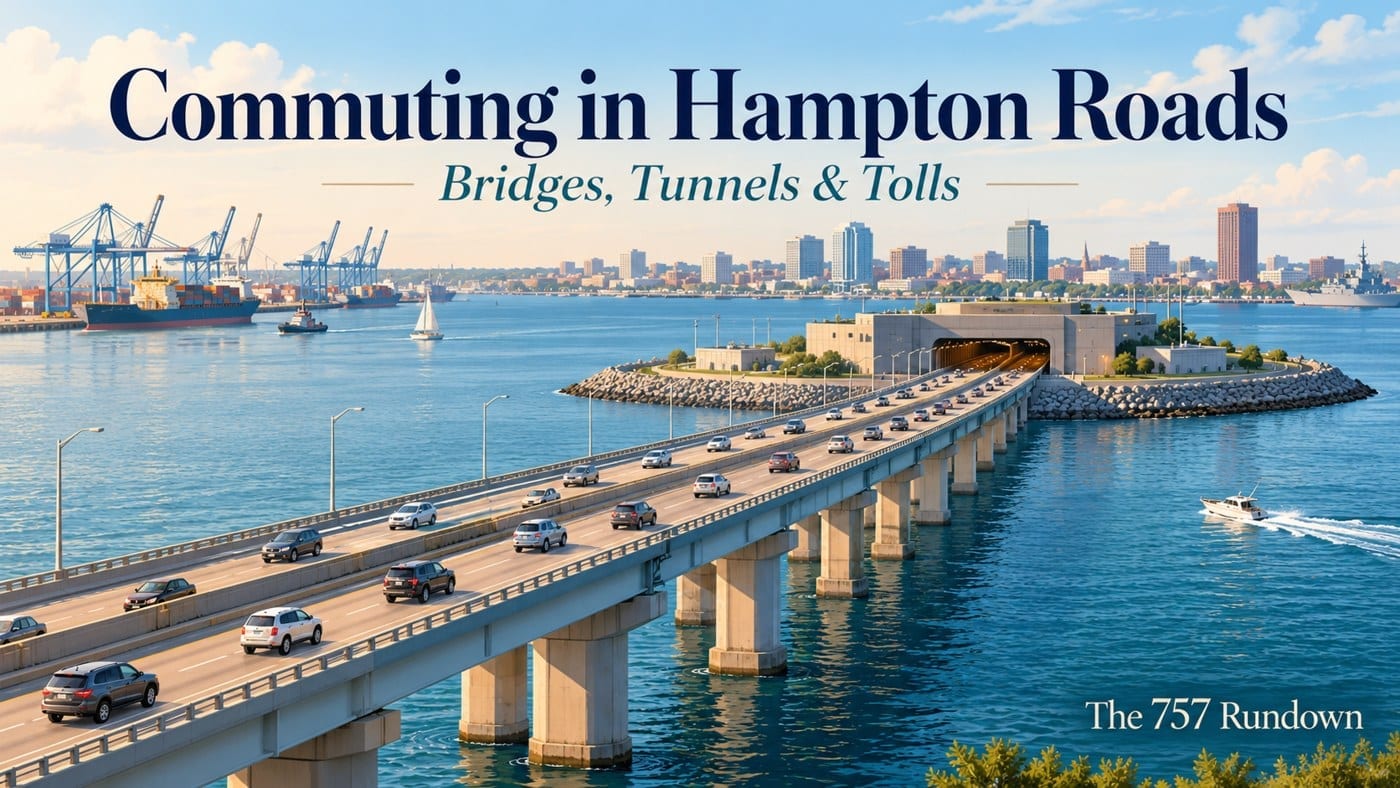
Commuting in Hampton Roads: Bridges, Tunnels, and Tolls |
Practical crossing, toll, and transit tips for newcomers choosing where to live |
Commuting in Hampton Roads can shape your move as much as the house you choose.
A waterfront neighborhood may look close to your workplace on a map, yet the route between them can depend on a bridge, a tunnel, or a busy interchange.
Before signing a lease or buying a home, compare the journey you will actually make on an ordinary workday.
Use our Moving to Hampton Roads relocation guide for the broader picture, then build your home search around the commute, transportation costs, and flexibility your household needs.
Start with the Peninsula and Southside
Hampton and Newport News are on the Peninsula, while Norfolk, Virginia Beach, Chesapeake, Portsmouth, and Suffolk are on the Southside.
Crossing between those areas often means choosing a harbor crossing rather than following a direct line on a map.
Keeping home and work on the same side of the harbor is a useful starting point, although it cannot guarantee a short commute.
Military commuters should map the gate they will use, not just the installation’s general address.
Learn the main crossings
The Hampton Roads Bridge-Tunnel, usually called the HRBT, carries I-64 between Hampton and Norfolk.
The Monitor-Merrimac Memorial Bridge-Tunnel, or MMMBT, carries I-664 between Newport News and Suffolk.
These crossings connect the Peninsula and Southside, and their general-purpose routes are toll-free.
The James River Bridge carries Routes 17, 258, and 32 between Newport News and Isle of Wight County.
It is also toll-free, but its lift span can open for vessels.
The Downtown Tunnel on I-264 and Midtown Tunnel on Route 58 connect Norfolk and Portsmouth, with tolls that depend on travel time and payment method.
Do not confuse the HRBT with the Chesapeake Bay Bridge-Tunnel, the tolled Route 13 crossing between Virginia Beach and the Eastern Shore.
An alternate crossing may help during a disruption, but compare the entire detour before assuming it will save time.
|
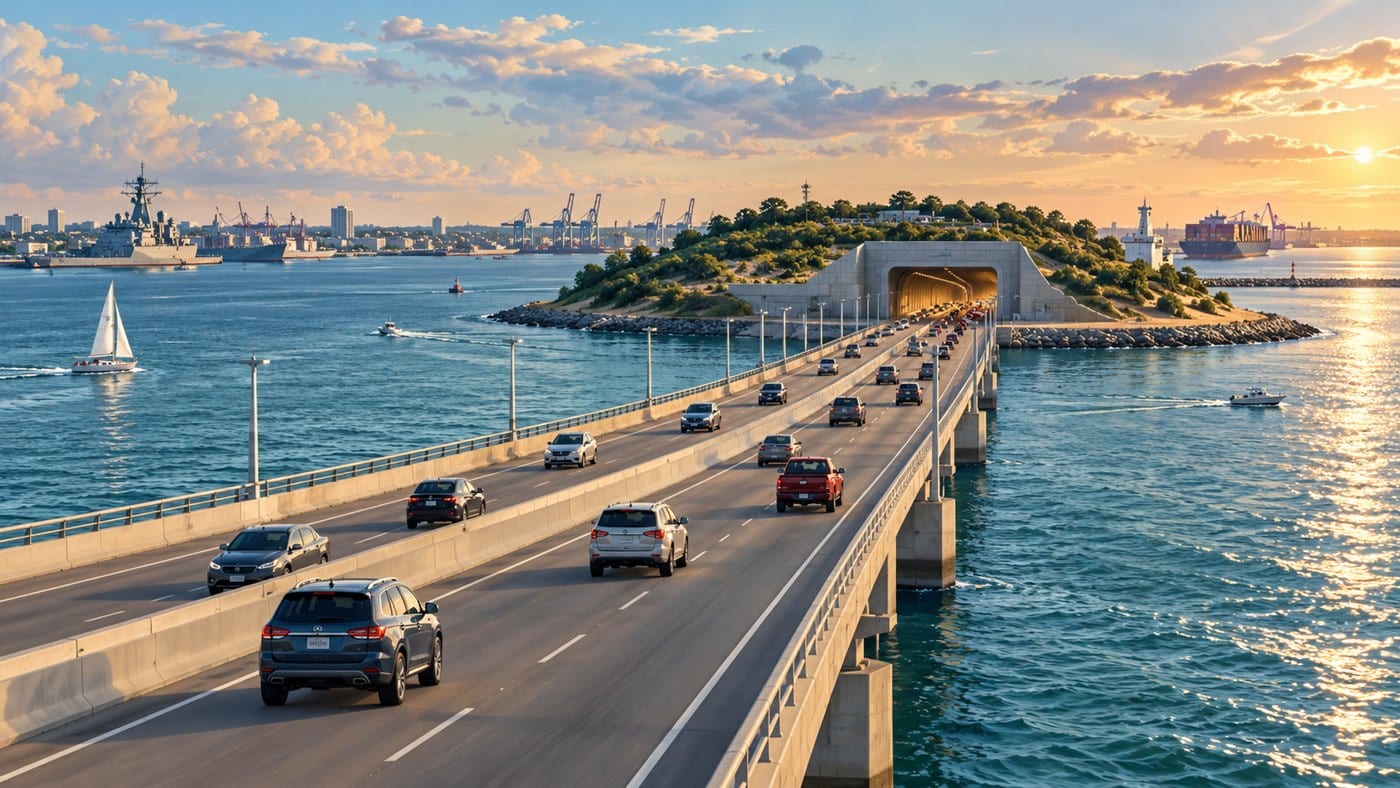 Illustration of a harbor bridge-and-tunnel crossing; not a specific route. |
Understand tolls before setting your budget
Hampton Roads tolls should be part of your housing calculation whenever your regular route includes a tolled crossing.
For the Downtown and Midtown tunnels, E-ZPass provides a lower-cost payment option than traveling without a transponder.
Check the operator’s current rate schedule for your vehicle and travel hours instead of relying on an old toll figure.
Calculate the cost in both directions, then multiply by the number of days you expect to commute.
As a hypothetical example, a $3 toll each way over 20 workdays would add $120 per month.
That example is arithmetic, not a quoted rate for a local crossing.
Add fuel, parking, maintenance, and any optional Express Lanes spending before deciding whether a lower rent offers a real saving.
Eligible residents may qualify for the Elizabeth River Tunnels Toll Relief Program, which requires enrollment and a Virginia E-ZPass account.
Review its current residency, income, vehicle, and trip-limit requirements before assuming a discount applies to you.
E-ZPass and E-ZPass Flex serve different needs
A standard E-ZPass handles electronic toll payments, while E-ZPass Flex also has a switch for qualifying high-occupancy travel.
For the Hampton Roads Express Lanes, a vehicle with two or more occupants, including the driver, can qualify for toll-free use with a properly mounted and funded Flex transponder set to HOV ON.
That means a driver and one passenger can meet the occupancy requirement.
Solo drivers using operating Express Lanes must pay the applicable toll with an accepted transponder.
These tolls are dynamically priced, so check the displayed price before entering.
Do not apply Northern Virginia’s HOV-3 rules to Hampton Roads, and do not assume a carpool exemption covers every tolled bridge or tunnel.
Check the particular segment’s signs and operating rules, especially while the regional Express Lanes network is being built.
Keep your account funded and your license plate information current so your transponder is ready when you need it.
|
 Illustration of two commuters and an electronic toll transponder. |
Test the commute rather than trusting one estimate
A midday drive is useful for learning the route, but it does not show what your morning and afternoon routine will feel like.
Try the journey during your expected travel hours on more than one ordinary weekday, when practical.
Record both directions, including the time spent reaching your parking space and walking to the workplace.
Ask your employer about shift changes, flexible hours, remote days, and commuter benefits before finalizing your search.
Set your own limit for a typical journey and decide how much variation you can tolerate.
A household with a fixed childcare pickup time may need more schedule flexibility than someone who can start work later.
Look at backup routes too, including whether they introduce another toll or considerably more mileage.
|
 Illustration of planning a commute before choosing a home. |
Use live traffic and project alerts
Virginia 511 provides traffic conditions, cameras, and reported disruptions that can help you compare routes before leaving.
Check planned closures as well as immediate congestion, particularly for a trip involving a harbor crossing.
The HRBT expansion and regional Express Lanes work make construction updates relevant to newcomers.
Future improvements should not be treated as a promise of a particular commute time today.
Use the HRBT project updates and current traffic alerts when planning your trip, rather than building your home decision around an assumed opening date.
Weather and bridge openings can also change a journey, so leave flexibility when an arrival time is essential.
Consider transit and shared commuting
Hampton Roads Transit offers buses, including 757 Express services, The Tide light rail, and the Elizabeth River Ferry.
The Tide operates within Norfolk; it does not provide a rail connection across the harbor to Hampton or Newport News.
The passenger ferry connects Norfolk and Portsmouth and can be worth investigating when both ends of your trip are near the waterfront.
Check current stops, service alerts, operating hours, fares, and the trip from the stop to your final destination.
A service that suits a daytime office schedule may not work for an early shift or late finish.
Carpooling and vanpooling are other options to investigate through goCommute, particularly when coworkers share a destination.
|
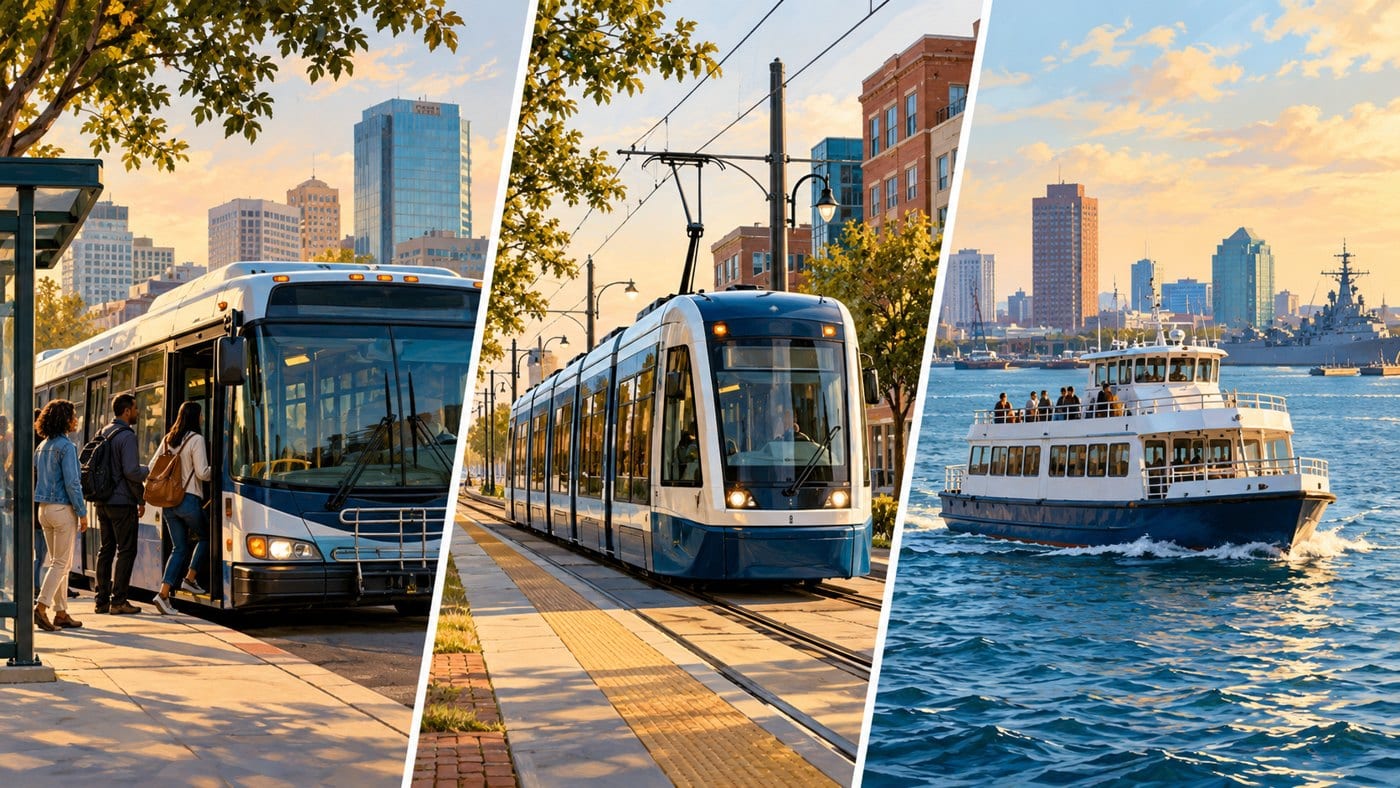 Illustration of bus, light rail, and passenger-ferry travel options. |
Choose the home that supports your routine
Compare transportation alongside the housing figures in our Cost of Living in Hampton Roads guide.
For city-by-city context, review Best Places to Live in Hampton Roads before narrowing the search to specific addresses.
The most practical choice is a home whose total cost and daily journey fit the life you expect to lead.
Visit, test the route, and budget for the ordinary week rather than choosing solely from a weekend impression.
Subscribe to The 757 Rundown for local news, restaurants, events, and useful guides as you get to know your new hometown.
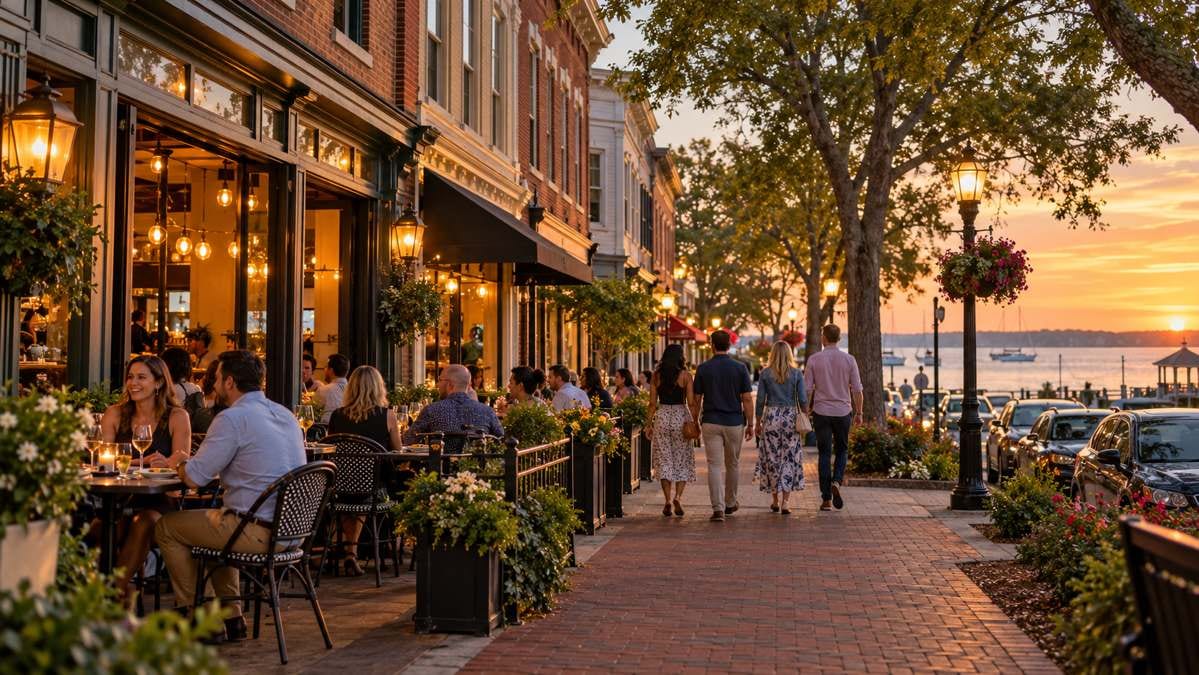
Featured image: illustrative composite of harbor commuting, not a photograph of a specific crossing.
Sources and planning resources Details checked October 8, 2026: VDOT crossing guide, Express Lanes rules, toll relief eligibility, and Hampton Roads Transit services. |



0 Comments
Join the conversation
Be the first to comment
Share your thoughts above.