
Parks and Outdoor Activities in Hampton Roads: A Local Guide |
Plan family walks, coastal outings, paddling, and park visits across the 757 |
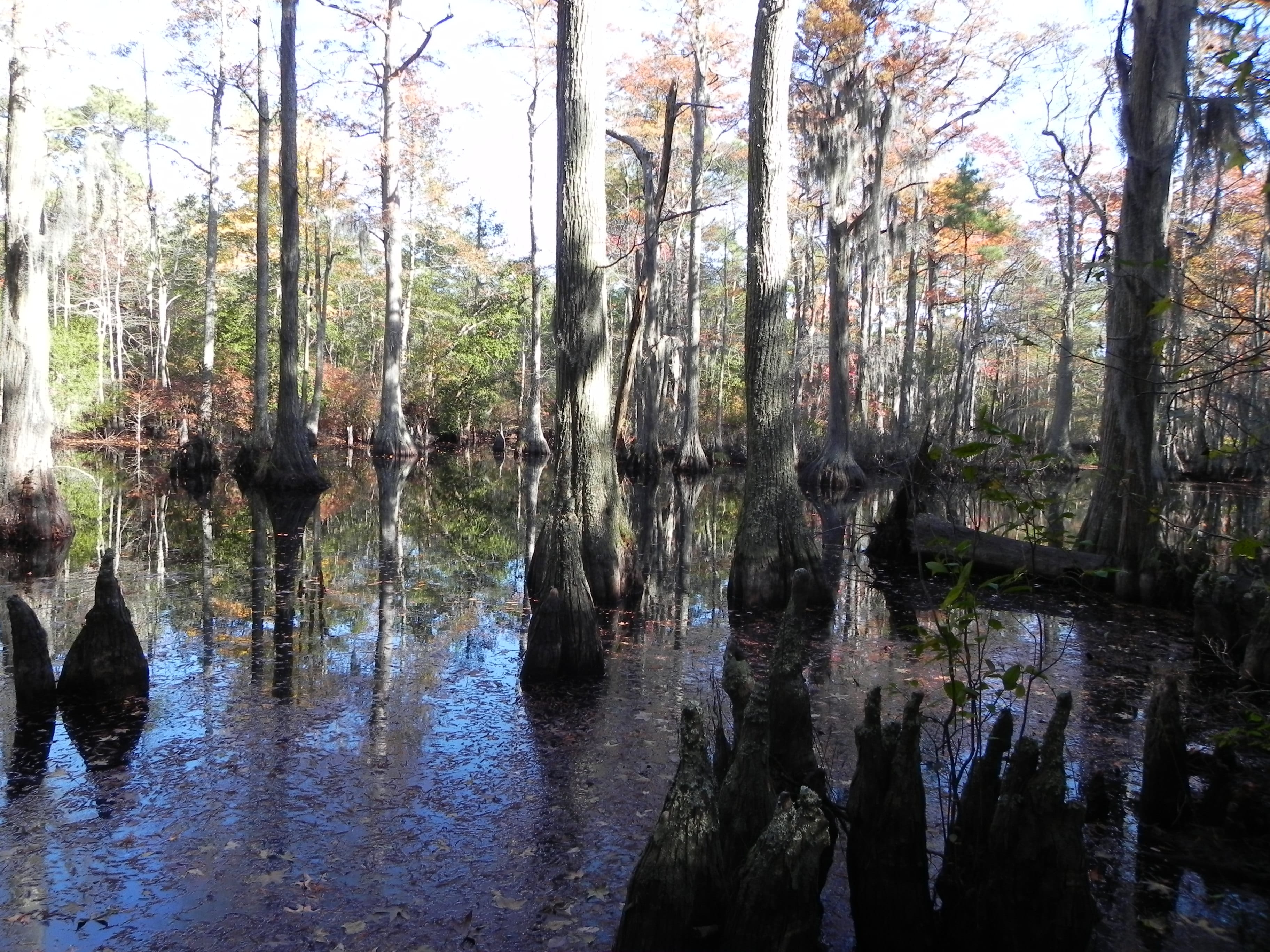
Find an Outdoor Outing That Fits Your Day
Parks and outdoor activities in Hampton Roads give you plenty of ways to spend a morning, an afternoon, or an entire weekend outside.
The trick is matching the destination to your time, your group, and the kind of experience you actually want.
A waterfront stroll with a stroller calls for a different plan than a long woodland hike, and a picnic with grandparents needs different preparation from a kayaking trip.
This guide focuses on the seven core cities of the 757: Hampton, Newport News, Norfolk, Virginia Beach, Chesapeake, Portsmouth, and Suffolk.
Use it as a starting point for choosing an area and an activity, then check the linked destination information before leaving home.
Visitor details were researched in October 2026; fees, closures, rentals, and seasonal services can change.
These are researched planning suggestions rather than claims that we have personally inspected every trail or facility.
How to Choose Parks in Hampton Roads
Start with the side of the water you are already on.
A nearby park can offer a better afternoon than a more famous destination that leaves you watching the clock during a bridge-tunnel crossing.
If your group has only two hours, prioritize the outing itself over collecting multiple stops across several cities.
Next, choose one main activity: walking, beach time, wildlife watching, paddling, fishing, or a picnic.
Then check the essentials that determine whether the visit works, including parking, restrooms, trail surfaces, shade, and the distance back to your vehicle.
For children, an easy turnaround often matters more than a long route.
For someone using a wheelchair or walker, ask about the exact path and facilities rather than relying on a general description of the park as accessible.
Finally, separate admission from the full cost of the day.
Parking, equipment rental, launch access, fishing permits, and reserved shelters can change an apparently free outing into a paid one.
Hampton: Beaches, Preserves, and Waterfront Walks
Buckroe Beach and Park is a useful starting point when your group wants Chesapeake Bay scenery and a park setting in the same outing.
Compare a beach visit with a shorter walk or picnic, and check seasonal restroom, swimming, and lifeguard information before choosing your arrival time.
Do not assume summer services continue throughout the year simply because the shoreline remains a familiar local destination.
Grandview Nature Preserve offers another Hampton option for visitors interested in coastal habitat and a nature-focused outing.
Treat a preserve visit as a walk into a natural setting, with footwear, drinking water, and your return route considered in advance.
Fort Monroe adds outdoor space with a strong historic backdrop, including walking paths, beaches, and views across the Chesapeake Bay.
The Seawall Trail is worth investigating when you want waterfront scenery without making swimming the centerpiece of the visit.
For any Hampton beach plan, verify the rules for the specific stretch of shoreline, including pets and seasonal restrictions.
Keep your itinerary simple: choose one main destination and leave room for an unhurried stop rather than trying to cover every beach in a day.
|
 Aerial view of Fort Monroe, Hampton (2015). Photo: National Park Service. Public domain. |
Newport News: Woodland Walks and Larger Park Days
The Noland Trail at The Mariners’ Museum and Park is a strong candidate for readers looking for walking trails in Hampton Roads.
The museum describes a five-mile trail around Mariners’ Lake, giving walkers a substantial woodland outing within Newport News.
Five miles is a meaningful commitment, especially if your group includes young children or people who do not walk regularly.
Study the map before starting and choose a route that matches everyone's energy rather than assuming the full loop is necessary.
Wear shoes suited to outdoor surfaces and allow time for stops instead of treating the listed distance as a promise of a quick visit.
Newport News Park offers another direction for a larger outdoor day, with a broader park setting and options that extend beyond one walking route.
Use its current facility information to decide which entrance, trail, or recreation area fits your plans.
A large park can have considerable distance between amenities, so save the relevant map instead of navigating only to the park's name.
For a relaxed Peninsula outing, one well-chosen park and a picnic can be enough.
Confirm camping reservations or other paid activities separately from a general daytime visit.
|
 A runner at Lions Bridge near the Noland Trail, Newport News (2009). Photo: Tony Alter, CC BY 2.0. |
Virginia Beach: State Parks and Coastal Nature
First Landing State Park is worth comparing when your group wants an outdoor setting beyond the resort strip.
Use the park's current trail guide to choose a route rather than assuming every entrance provides the same experience.
A woodland walk, a beach visit, and a camping trip involve different facilities and preparation.
State-park parking charges may apply, so check the current fee schedule for your visit date.
Back Bay National Wildlife Refuge offers another kind of coastal outing, with wetlands, wildlife observation, and trails toward neighboring False Cape State Park.
Wildlife protection affects access, so an older trip report is not a substitute for current refuge notices.
False Cape requires more preparation than a typical municipal park.
Ordinary public vehicle access is not available, and travel through Back Bay can be affected by seasonal route restrictions.
Check the approved access method, distance, weather, and return arrangements before committing your group.
If your goal is an easy first outing, choose a shorter established walk elsewhere and save the more involved route for a properly planned day.
Beach walking and biking also depend on conditions; a route drawn on a map does not guarantee an easy surface.
|
 Great blue heron photographed from the Raptor Trail at Back Bay National Wildlife Refuge (2026). Photo: Lydia Hansen/USFWS. Public domain. |
Chesapeake: Lake Loops and River Park Visits
Oak Grove Lake Park offers a straightforward place to start researching easy walking outings in Chesapeake.
The city lists a roughly 1.5-mile packed stone-dust trail around the lake, making route length easier to understand before arrival.
That surface description is useful, but anyone using mobility equipment should still check current conditions and access details.
A loop can simplify navigation, although every member of the group still needs to manage the distance back to the starting point.
Northwest River Park provides a different setting on the Northwest River, with a trail network and campground.
The city describes several connected hiking routes, so consult the map and select one rather than setting off without a destination.
If you are interested in camping or boating, verify availability and booking arrangements directly.
Elizabeth River Park adds a waterfront option with boat-ramp access on the Southern Branch of the Elizabeth River.
A boat ramp, however, is not automatically the most comfortable place to launch a beginner's kayak.
Check the launch layout, vessel traffic, and permitted uses before choosing it for your group.
Chesapeake works well as a single-city outing when you want to limit driving between activities.
Norfolk: Urban Waterfront Time
Norfolk is a good place to combine outdoor time with a city outing rather than planning a remote nature trip.
The Elizabeth River Trail connects waterfront areas and neighborhoods, with several access points that let you choose a manageable section.
You do not have to complete the entire trail to enjoy a worthwhile walk.
Start by identifying your parking location, your turnaround point, and any road crossings along the segment you want.
Town Point Park sits along the downtown waterfront and can provide an outdoor pause during a larger visit.
Event schedules matter here: a festival or ticketed program can change the atmosphere, access, and cost compared with an ordinary day.
Check the calendar before promising a quiet picnic or unobstructed walk.
An urban waterfront also requires attention to cyclists, intersections, working water, and the edge of the river.
For a mixed-age group, a short walk with a planned rest stop may work better than an ambitious mileage target.
Leave time for parking and the walk back to your vehicle, especially if you have another timed activity afterward.
Portsmouth: Wildlife Preserves and Urban Nature
Hoffler Creek Wildlife Preserve gives Portsmouth visitors a place to investigate wildlife-oriented outdoor recreation.
The preserve is managed for conservation as well as recreation, making its visitor rules part of the planning process.
Check opening days, trail access, and current program details before traveling.
Do not assume a preserve permits the same activities as a playground park, particularly when bringing pets or recreational equipment.
Paradise Creek Nature Park offers another Portsmouth option, connecting an outdoor visit with the story of restoring an urban river environment.
The Elizabeth River Project maintains information about the park and its environmental work.
Choose it when your group enjoys looking closely at a landscape rather than simply covering distance.
Children can turn a short walk into a habitat-spotting activity by looking for birds, plants, and changes between wooded and wetland areas.
Observe from permitted routes and keep a respectful distance from wildlife.
For a first visit, plan one destination and leave flexibility for weather, opening hours, and the pace of the slowest walker.
Organized walks or paddles may have separate registration requirements.
Suffolk: Creek Access and Lake Settings
Bennett's Creek Park and Lone Star Lakes Park offer two starting points for planning outdoor time in Suffolk.
The city's park and water-access information can help you compare a creek setting with lake-based recreation.
Choose the specific activity before choosing the park: a casual walk, a family picnic, fishing, and launching a boat require different facilities.
Confirm the correct entrance and any rules for the water you intend to use.
A listed boat ramp does not mean every type of craft or motor is allowed at every lake.
The Great Dismal Swamp National Wildlife Refuge is another option for a more nature-focused day in the wider Suffolk area.
Plan around a named entrance or route rather than navigating to the refuge as though it has one interchangeable arrival point.
Vehicle access on the Lake Drummond Wildlife Drive requires a permit and fee under the refuge's published rules.
Walking and driving experiences should therefore be compared separately.
Bring water, insect protection, and a realistic turnaround plan, and check current notices before a longer visit.
The quieter setting is part of the appeal, but it also makes self-sufficient preparation more important.
|
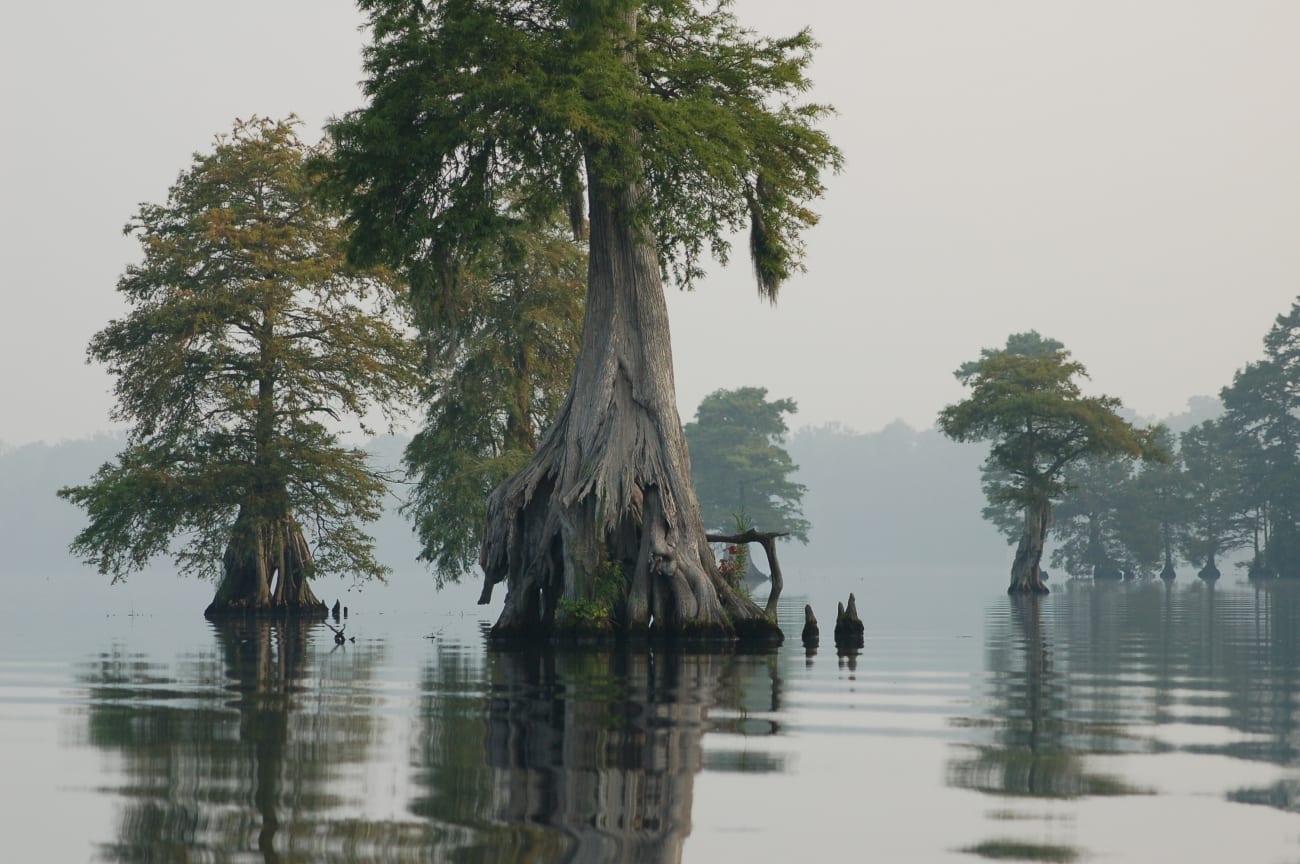 Cypress trees at Great Dismal Swamp National Wildlife Refuge (2006). Photo: R. Winn/USFWS. Public domain. |
Easy Hiking Trails and Family Walks
The best easy hiking trails in Hampton Roads are the ones that fit the people coming with you.
Distance alone is a poor measure of difficulty.
A short sandy route may feel harder than a longer firm path, while roots, puddles, exposure, and a lack of seating can change the experience.
For a first outing, choose a clearly mapped route and set a turnaround time before starting.
Oak Grove's described lake loop, a selected Elizabeth River Trail segment, or a carefully chosen Fort Monroe walk are useful places to begin comparing options.
Check the actual route rather than assuming the whole destination has the same surface.
With children, build the outing around something they can notice: birds on the water, different leaves, boats passing, or an interesting view.
Allow for snack stops and a slower return.
For a multigenerational group, ask everyone privately what distance and facilities they need before deciding.
A shorter walk that everyone enjoys is a better foundation for a repeat outing than a route that leaves someone struggling.
Keep bikes and walking plans aligned with each location's permitted uses.
Kayaking and Fishing: Plan the Access First
Kayaking in Hampton Roads starts with choosing an appropriate launch and waterway, not simply finding water nearby.
Use official access information to check where launching is permitted, whether parking is available, and what facilities are on site.
Then consider wind, tide, current, boat traffic, and the ability of everyone in the group.
Beginners should seek qualified local instruction or a guided outing when they are unfamiliar with the water.
Wear a properly fitted life jacket and carry the equipment appropriate to your craft and trip.
Confirm rentals directly; an old photograph of kayaks is not proof that rentals are operating on your visit date.
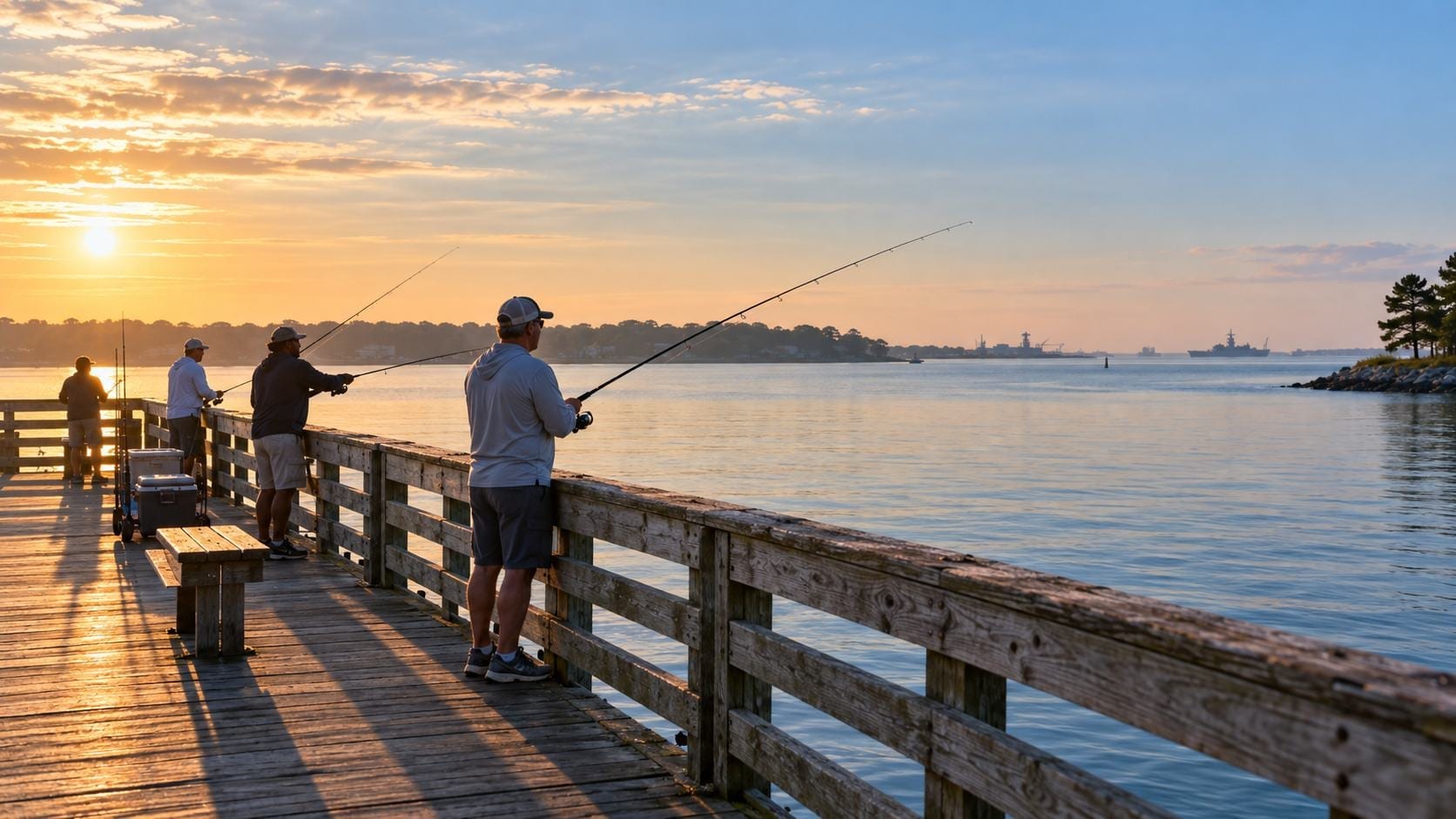
Fishing requires a separate check of the location's rules, the type of water, and applicable license or permit requirements.
Do not assume a public shoreline permits fishing everywhere or that one license covers every setting.
Ask about restrictions before packing for a particular pier, bank, or lake.
Our Hampton fishing guide offers a more focused starting point for readers comparing local piers and parks.
Keep this pillar as the overview, then use the dedicated guide and current official rules to plan the actual fishing trip.
|
 Aerial view of Lake Drummond and Great Dismal Swamp National Wildlife Refuge (2006). Photo: Rob Bruner/NOAA. Public domain. |
Three Simple Outdoor Itineraries
For a Peninsula morning, choose a manageable Fort Monroe walk and make the waterfront the main attraction.
Bring a snack, allow time to rest, and decide whether your group wants to extend the outing only after the first walk.
An alternative is a Newport News woodland visit centered on a selected Noland Trail route.
For an urban waterfront afternoon, choose one downtown Norfolk section of the Elizabeth River Trail and check Town Point Park's event calendar.
Plan parking first and pick a return point that works for everyone.
Keep indoor attractions or shopping optional rather than overloading the schedule.
For a Chesapeake family outing, compare the Oak Grove lake loop with a shorter visit tailored to your group's ability.
Use the current map and facility information to decide whether to walk, picnic, or simply enjoy the setting.
These are flexible outing ideas rather than booked tours or promises about available services.
Change the destination when weather, closures, or access needs make another option more suitable.
One satisfying outdoor stop often beats a day spent driving between three.
Costs, Seasons, and Practical Questions
Are parks in Hampton Roads free?
Some outings have free admission, while others involve parking charges, refuge access fees, equipment costs, or paid programs.
Check the specific destination and activity rather than applying one rule to the entire region.
What should you bring?
Start with drinking water, suitable shoes, weather-appropriate layers, sun protection, a charged phone, and the relevant trail map.
Pack out your rubbish and avoid feeding wildlife.
Can you bring a dog?
Rules vary between parks, preserves, beaches, and refuges, and may change seasonally.
Check the destination's pet policy before leaving home.
When is a good time to go?
Choose conditions that suit the activity and your group rather than relying on a season alone.
Summer heat can make an exposed walk uncomfortable, while rain may affect natural surfaces and wind can change waterfront conditions.
In autumn and winter, shorter daylight makes your return time especially important.
What about accessibility?
Ask specific questions about parking-to-path distance, surface firmness, gradients, restrooms, seating, and any beach-access equipment.
Those details are more useful than a broad accessibility label.
Before every outing, check current weather and operating notices, and tell someone your plans for a longer or more isolated trip.
Photo Credits and Reuse InformationThese are real photographs of the named locations, taken on the dates shown; older images do not establish current trail or facility conditions. Featured image: Bald Cypress Swamp at First Landing State Park, Virginia State Parks staff, 2010; CC BY 2.0. Aerial view of Fort Monroe, Hampton (2015). Photo: National Park Service. Public domain. Photo source and rights. A runner at Lions Bridge near the Noland Trail, Newport News (2009). Photo: Tony Alter, CC BY 2.0. Photo source and rights; CC BY 2.0 license. Great blue heron photographed from the Raptor Trail at Back Bay National Wildlife Refuge (2026). Photo: Lydia Hansen/USFWS. Public domain. Photo source and rights. Cypress trees at Great Dismal Swamp National Wildlife Refuge (2006). Photo: R. Winn/USFWS. Public domain. Photo source and rights. Aerial view of Lake Drummond and Great Dismal Swamp National Wildlife Refuge (2006). Photo: Rob Bruner/NOAA. Public domain. Photo source and rights. Photographs are reproduced without editorial alteration; display sizes may be adjusted for the article layout. Make Your Next 757 Outing Easier
Begin with a destination close enough to enjoy without rushing, choose one main activity, and build the day around the needs of your group.
Return to favorite parks in different seasons before assuming a memorable outing always requires somewhere new.
For more budget-conscious ideas, explore our guide to 25 Free & Affordable Things to Do in Hampton Roads.
Take the quick local-interest quiz to get the guide and discover more ways to explore the 757.
If you are getting to know the area before a move, our Hampton Roads relocation guide adds context for choosing where to live and how to plan regional travel.
Subscribe to The 757 Rundown for local events, affordable outings, community news, and more ideas for enjoying Hampton Roads.
Already subscribed through the quiz?
You are all set; keep the guide handy for the next time you want a reason to get outside. |

0 Comments
Join the conversation
Be the first to comment
Share your thoughts above.